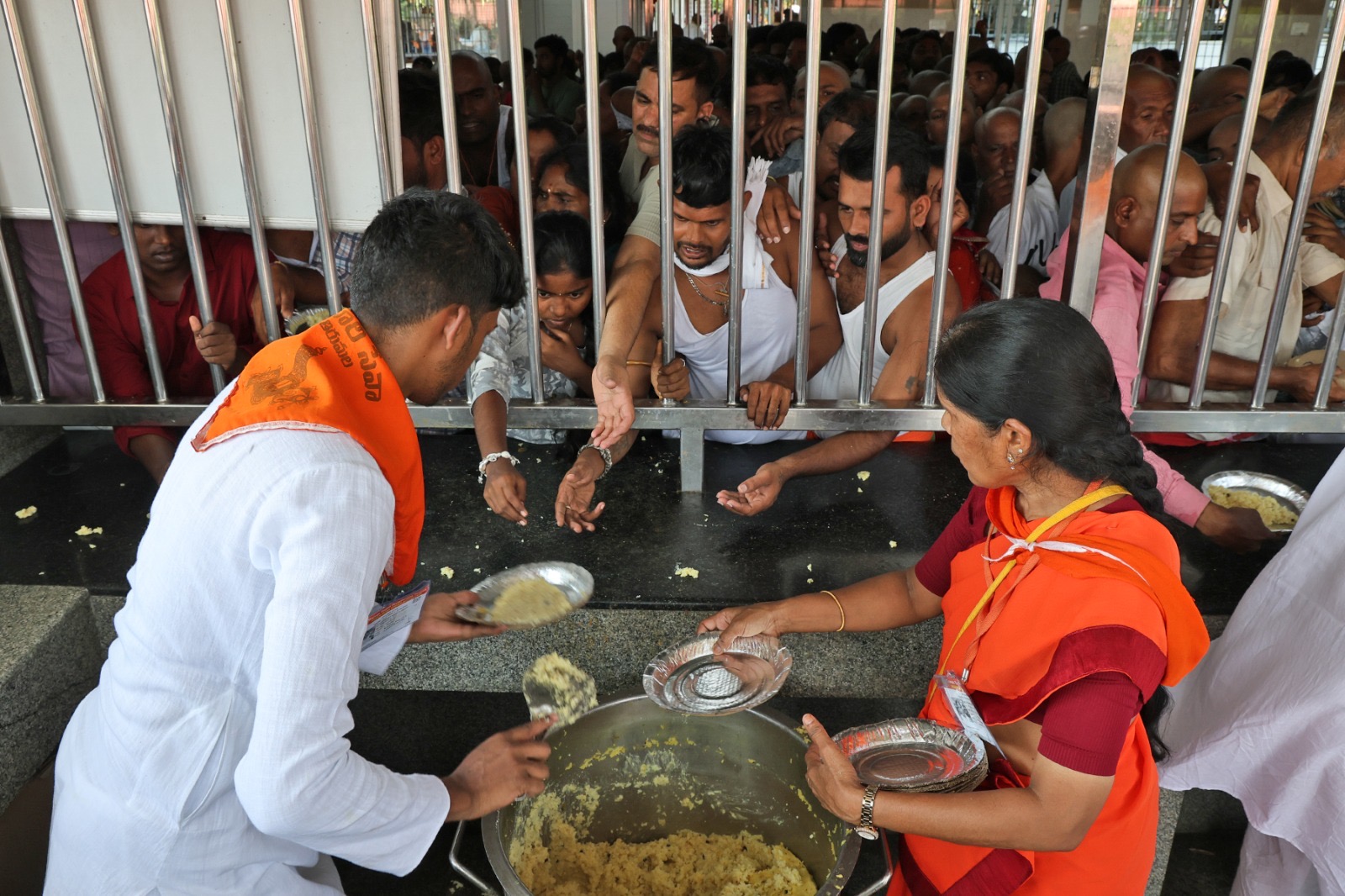
Tirumala, 20 May 2026 – On 20 May 2026, a total of 86,315 pilgrims had darshan of Lord Sri Venkateswara Swamy in Tirumala, marking one of the heaviest‑rush‑days recorded in the current summer‑vacation‑cycle. The day recorded exceptionally high‑tonsures and strong‑hundi‑collection, while free‑darshan‑queue‑waiting‑time ballooned to 24–30 hours for those without SSD tokens, with the line extending far beyond the normal‑compartment‑zone.
-
Total pilgrims who had darshan: 86,315
-
Tonsures (Mundan): 44,107
-
Hundi Kanukalu (cash‑offerings): ₹3.94 Crore
-
Waiting‑compartments used for free‑darshan: Outside line at Octopus building (near Gogarbam Dam Circle)
-
Approx. Sarvadarshanam waiting time (without SSD tokens): 24–30 hours
Crowd‑situation and implications
Extreme‑festival‑grade‑rush day
A count of 86,315 pilgrims places 20‑05‑2026 in the top‑tier‑rush‑band, higher than the 84,315‑pilgrim‑day on 19‑05‑2026 and approaching the 91,020‑pilgrim‑rush seen two days earlier. This indicates that Tirumala was in full‑festival‑mode, with summer‑holidays, weekend‑effect, and auspicious‑dates drawing lakhs of devotees in a continuous‑band.
Record‑high‑tonsures‑day
44,107 tonsures on the same day is one of the highest‑tonsure‑bands in 2026, significantly higher than the 43,032‑tonsure‑day on 19‑05‑2026 and previous‑days. This strongly suggests that 20‑05‑2026 functioned as a major‑sankalpa‑day, where child‑tonsure, family‑vows, and Rahu‑Ketu‑dosha‑removal‑sankalpas converged into a single‑day‑cluster.
Hundi Kanukalu – ₹3.94 Crore
₹3.94 Crore in daily‑hundi‑collection is a very strong‑day‑value, matching the strong‑hundi‑band seen on 10‑05‑2026 and near‑4‑Crore‑peaks in May‑2026. Even with 24–30‑hour‑free‑queues, devotees kept contributing generously, treating this block‑of‑days as extra‑sakti‑and‑seva‑rich.
Waiting‑time and queue‑management
Free‑darshan queue‑time: 24–30 hours
An approximate Sarvadarshanam‑waiting‑time of 24–30 hours for those without SSD tokens shows that this was effectively a 1.5‑to‑2‑day‑loop, where devotees who started the free‑queue in the morning could still be in line well into the next afternoon.
-
On such days, Sarvadarshanam shifts from a “queue‑wait” to a live‑camp‑in‑the‑open, so devotees must bring water, packed‑food, medicines, blankets, and possibly a cheap chair if they insist on free‑darshan.
-
SSD tokens or ₹300‑Special‑Entry are the only practical tools to keep in‑complex‑time within 1–2 hours on a 24–30‑hour‑day.
Compartment‑spill‑out to Octopus building (Gogarbam Dam Circle)**
The note that the free‑darshan‑line spilled out to the Octopus building near the Gogarbam Dam Circle indicates that TTD’s internal‑compartment‑and‑Silathoranam‑line‑capacity was fully saturated, and the queue had extended beyond the usual spiral‑belt into the outer‑Ring‑and‑Dam‑Circle‑zones.
This kind of spill‑out is typically seen only on absolute‑peak‑days, when the 86,000+‑pilgrim‑band and 44,000+‑tonsures together overload external‑sanitation, shade, and movement‑systems.
What devotees should plan if a similar‑day repeats
If facing a 24–30‑hour‑Sarvadarshanam‑day
-
Strictly use SSD tokens or 300‑Special‑Entry; attempting free‑darshan on a 24–30‑hour‑day is effectively a 1.5‑to‑2‑day‑time‑investment, which is unsafe for elders and risky for working‑day‑travellers.
-
If you must stand in the line, enter at night when the band is slightly lower and camp with full‑support (water, food, medicine, communication).
-
For families with elders, infants, or health‑concerns, avoid such days completely; those who must travel should shift to paid entries (Divya / Sheegra / VIP‑Break) that reduce queue‑time by 20+ hours.
Crowd‑and‑hundi‑trend insights
Days with 86,000+ pilgrims, 44,000+ tonsures, and ₹3.9+‑Crore‑hundi are among the most‑stressful and intense‑days in Tirumala; they are excellent‑seva‑days for TTD but extremely taxing for devotees.
Planning to avoid such mega‑rush‑blocks, or to book SSD‑and‑paid‑entries well in advance, is the safest strategy for a comfortable‑and‑safe‑yatra.
Key takeaway bullets (what to do / remember)
-
On 20 May 2026, Tirumala recorded 86,315 pilgrims, 44,107 tonsures, and ₹3.94 Crore hundi, with an approx. 24–30‑hour waiting‑time for Sarvadarshanam without SSD tokens and the free‑darshan‑line extending to the Octopus building near Gogarbam Dam Circle.
-
These figures indicate an absolute‑peak‑summer‑rush, with festival‑grade‑crowd‑pressure and an extraordinarily high‑sankalpa‑day reflected in the record‑tonsure‑band.
-
For similar‑crowd‑days, devotees should strictly avoid free‑darshan unless physically and mentally prepared for 24–30‑hour‑in‑line‑time; SSD, 300‑Special‑Entry, or paid‑Divya‑options are mandatory for reasonable‑smooth‑darshan.
-
Future‑Tirumala‑Darshan‑stats‑like these can help pilgrims decide which dates to skip, how to plan seva‑budgets, and when to bet on early‑SSD‑booking instead of last‑minute‑luck.
Follow our Instagram page https://www.instagram.com/tirumalatirupativlogs/ for live‑updates, Tirumala‑Darshan‑Stats, and crowd‑advice.