Vontimitta / Tirupati, March 29, 2026 – As part of the annual Brahmotsavams of Sri Kodandarama Swamy Temple, Vontimitta, Sri Sita, Rama, and Lakshmana graced devotees with divine darshan on the Simha (lion) Vahanam last evening in a grand and spiritually vibrant procession. The third‑day Vahana Seva drew thousands of devotees, transforming the temple town into a sea of chanting, music, and traditional celebration.
Simha Vahanam at 7:00 PM – Vontimitta brahmotsavams
The deities embarked on the lion‑shaped vehicle at 7:00 PM, marking one of the most visually striking sevas of the 10‑day Brahmotsavams. The procession began from the temple sanctum and moved through the prakarams and designated streets, amid the rhythmic beats of Kerala nagaswaram and drums. Devotees lined both sides of the route, waving hands in folded prayer and offering continuous camphor harati as the utsava murtis passed by.
Ritual lamps and temple lights illuminated the vahanam, casting a golden glow on the idols of Sri Sita, Rama, and Lakshmana seated side by side. The atmosphere was charged with bhakti, as loud chants of “Sri Ramachandra Kripalu” and “Sitarama” echoed along the route, creating a deeply immersive devotional experience.
Cultural programs and celebrations
Along the procession path, devotional groups performed Chekka Bhajans and Kolatam (stick dance), praising Lord Rama through rhythmic songs and synchronized movements. The traditional folk dance added a festive, celebratory layer to the ritual, blending devotion with local culture. The sound of Kerala bejjams and temple nadasvaras provided a rich, classical backdrop, heightening the sense of grandeur.
Women and children distributed sandal paste, kumkum, and harati lamps, while temple volunteers and volunteers from local seva groups helped manage the crowd and maintain smooth flow along the route. The streets were decorated with torans, flags, and flower arches, turning the whole area into a celebratory mandala for the Lord’s temporary stay outside the sanctum.
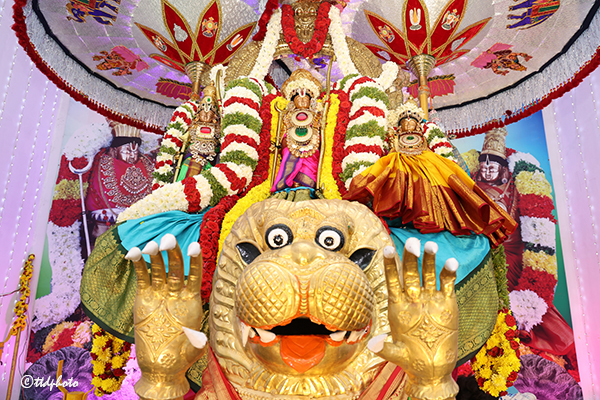
Symbolism of the lion Vahanam
Narasimha, the lion‑form avatar, is the fourth incarnation among Lord Vishnu’s Dashavataram, symbolizing the divine destruction of evil and the protection of the righteous. In yogic and spiritual symbolism, the lion represents strength (power to carry through life’s challenges) and speed (swift spiritual progress).
The Simha Vahanam thus carries a deep inner meaning: when a devotee develops lion‑like devotion, courage, and inner strength, the Lord showers His grace and removes obstacles. The sight of Sri Sita, Rama, and Lakshmana seated on the lion serves as a reminder that divine protection is available to those who serve with unwavering faith and fearless surrender.
Temple officials and devotee participation
The event was attended by Temple Deputy EO Smt. Prashanthi, Superintendent Sri Hanumanthaiah, and Temple Inspector Sri Naveen, who oversaw the procession, security, and ritual coordination. Their presence underscored the official importance of the Brahmotsavams and ensured disciplined management of the large crowds.
A huge number of devotees from Vontimitta, Tirupati, Kadapa, and surrounding areas participated, filling the temple complex and the main roads. For many, the Simha Vahanam became a once‑in‑a‑year opportunity to witness the divine trio in a powerful, open‑air form, accompanied by the full pomp of traditional music and dance.
Key takeaways from the day
-
The Simha Vahanam transformed the Brahmotsavams into a grand cultural‑cum‑spiritual festival, combining strict ritual with vibrant folk art.
-
The lion symbolism linked the devotee’s inner strength and devotion directly to the Lord’s grace, giving the seva a deeper philosophical dimension.
-
The joint darshan of Sri Sita, Rama, and Lakshmana on the lion‑shaped vahanam highlighted the Lord’s protective, family‑oriented presence towards His devotees.
Follow the Instagram page @tirumalatirupativlogs for the latest updates, exclusive photos, and real‑time coverage of Brahmotsavam sevas and other temple events across Tirumala–Tirupati and Vontimitta.