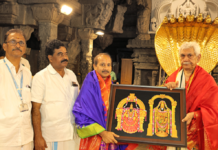
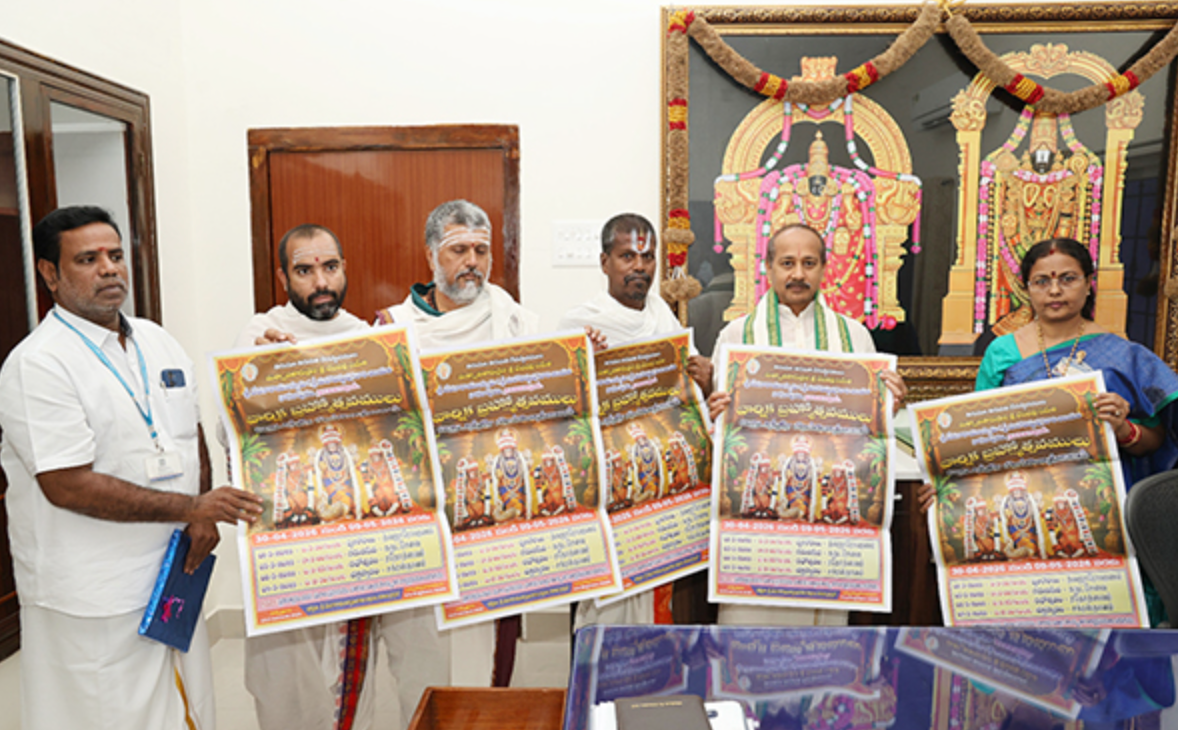
Tirupati, 26 April 2026 – Tirumala Tirupati Devasthanams (TTD) Executive Officer Sri M. Ravichandra released the posters and booklet of the annual Sri Vedanarayana Swamy Brahmotsavams at the EO Camp Office in Tirupati on Sunday. The Brahmotsavams will be held from 1 to 9 May 2026 at Sri Vedanarayana Swamy Temple, Nagalapuram, about 70 km from Tirupati. The EO has directed officials to make elaborate, summer‑ready arrangements for devotees, including shelter‑canopies, drinking‑water‑points, first‑aid, and attractive‑decorations, and has invited devotees to participate in large numbers during the nine‑day‑festival.
1. What EO M. Ravichandra directed
-
Coordinated‑arrangements for summer
-
Considering the peak‑summer conditions in May, the EO instructed officials to put up shaded shelters, drinking‑water‑booths, cool‑painting of queue‑lines, and enhanced‑sanitation at Nagalapuram so that devotees are protected from heat and long‑practice‑walking.
-
He also directed mobile‑toilets, first‑aid‑camps, ambulance‑support, fire‑service‑presence, and organised‑parking, ensuring that medical‑needs and crowd‑safety are priority‑planned.
-
-
Decorations and devotional‑programmes
-
Attractive‑electrical‑decorations (Toranas, LED‑gates, and string‑lights) and floral‑canopies will be installed around the temple‑streets of Nagalapuram, turning the village‑road‑circuits into festive‑processional‑lanes.
-
Alongside, devotional‑programmes such as Annamacharya‑Sankeertanas, Harikatha, and bhajan‑sessions will be arranged during the daily Vahana‑Seva‑slots, enriching the spiritual‑ambience for devotees attending the procession‑darshan.
-
2. Brahmotsavams schedule at a glance
The Brahmotsavams will run from 1 May (morning) to 9 May (evening), starting with Dwajarohanam (flag‑hoisting) on 1 May and concluding with Chakrasnanam + Dhwajavarohanam on 9 May. The main highlight each day is the double‑Vahana‑seva‑cycle (morning + evening), with grand‑processions of Sri Vedanarayana Swamy and Sri Vedavalli Ammavaru on different vahanas.
Vahana Seva Timings (Daily)
-
Morning session: 8:00 AM to 9:30 AM
-
Evening session: 7:30 PM to 9:00 PM
These two daily‑slots allow devotees to attend the specific‑vahana‑which‑their‑vrata‑or‑astro‑guidance‑recommends, while also enjoying the festive‑lights‑and‑crowd‑mood in the evening.
3. Day‑wise Vahana‑Sevas (1–9 May)
-
1 May – Dwajarohanam & Pedda Sesha Vahanam
-
The festival begins with Dwajarohanam (flag‑hoisting) around 5:30–6:30 AM in the morning, followed by evening‑Seva on Pedda Sesha Vahanam (Great Serpent‑hooded‑Coil‑Vahanam), symbolising Nagaraja‑shelter‑around‑the‑Lord and protection from snake‑related‑doshas and fear‑of‑deep‑waters‑and‑energy‑loss.
-
-
2 May – Chinna Sesha Vahanam & Hamsa Vahanam
-
Chinna Sesha Vahanam (Small Serpent‑coil‑vahanam) continues the Naga‑energy‑theme, often chosen by devotees for Sarpa‑dosha‑removal, mental‑calm, and dream‑stability.
-
Hamsa Vahanam (swan‑backed‑vahanam) follows, representing discriminative‑knowledge (Viveka) and the ability to separate Truth‑from‑illusion, especially popular with students, scholars, and seekers‑of‑clarity.
-
-
3 May – Simha Vahanam & Muthyapu Pandiri Vahanam
-
Simha Vahanam (Lion‑Vahanam) is associated with royalty, courage, and victory‑over‑enemy‑forces, both inner and outer; devotees use this darshan for self‑confidence and leadership‑vrata.
-
Muthyapu Pandiri Vahanam (Diamond‑Crown‑Vahanam) is a high‑decorative‑royal‑seva, visually‑rich and ideal for devotees desiring prosperity‑and‑status‑blessings.
-
-
4 May – Kalpavruksha Vahanam & Sarvabhoopala Vahanam
-
Kalpavruksha Vahanam (Divine‑Wish‑Tree‑Vahanam) is chosen by devotees for wish‑fulfilment, material‑prosperity, and family‑well‑being; priests chant special‑mantras for Sankalpa‑completion on this day.
-
Sarvabhoopala Vahanam (Cosmic‑King‑Vahanam) symbolises Lord as the ruler‑of‑all‑worlds, drawing devotees seeking overall‑protection‑and‑stability‑wrath‑removal.
-
-
5 May – Mohini Avataram & Garuda Vahanam
-
Mohini Avataram is a rare‑and‑charming‑seva where the Lord is presented in feminine‑form‑as‑Mohini, testing the devotees’ inner‑attachment‑and‑Vairagya; this day is spiritually‑deep and often linked with Siddhi‑and‑subtle‑knowledge‑vrata.
-
Garuda Vahanam follows, highlighting Garuda’s role as the fastest‑mount and symbolising escape‑from‑ enemies, quick‑results‑for‑seva‑efforts, and removal‑of‑evil‑eye‑and‑Sarpa‑doshas.
-
-
6 May – Hanumantha Vahanam & Gaja Vahanam
-
Hanumantha Vahanam attracts devotees who seek protection‑from‑danger, physical‑strength, and success‑in‑exam‑or‑competitive‑fields; this vahanam is especially powerful for children‑and‑student‑devotees.
-
Gaja Vahanam (Elephant‑backed‑seva) is linked with royalty, wisdom, and stability of wealth; devotees use it for career‑promotion‑vrata, business‑growth‑pooja, and removal‑of‑financial‑loss‑dosha.
-
-
7 May – Surya Prabha Vahanam & Chandra Prabha Vahanam
-
Surya Prabha Vahanam (Solar‑Light‑Vahanam) is associated with the Sun‑energy and is powerful for health‑and‑authority‑vrata, Vyakul‑dosha‑removal, and opening‑new‑projects.
-
Chandra Prabha Vahanam (Moon‑Light‑Vahanam) calms the mind‑and‑emotions, chosen by devotees for mental‑peace, marriage‑harmony‑vrata, and relief‑from‑anxiety‑or‑depression‑patterns.
-
-
8 May – Rathotsavam, Arjita Kalyanotsavam, & Aswa Vahanam
-
Rathotsavam (Ratha‑Seva) is the chariot‑procession day, when Sri Vedanarayana Swamy and Sri Vedavalli Ammavaru are taken through Nagalapuram‑streets in a decorated‑Ratha, drawing maximum‑crowd for Rath‑darshan, Thotta‑Seva, and flower‑showers.
-
Arjita Kalyanotsavam is the paid‑wedding‑seva where devotees can sponsor specific‑vrata‑or‑Annadana‑and‑get Arjitha‑Seva‑benefits, often used for obstacles‑removal‑and‑family‑prosperity.
-
Aswa Vahanam (Horse‑backed‑seva) follows, linked with speed, travel‑protection, and victory‑over‑enemies, commonly chosen by devotees whose vrata‑plan‑focuses on career‑mobility‑and‑journey‑blessings.
-
-
9 May – Chakrasnanam & Dhwajavarohanam
-
Chakrasnanam is the culminating‑Abhisekam‑day, where the Lord is given a ceremonial‑bath‑with various‑materials (milk, curd, honey, etc.) and special‑poojas are performed; this is Ayush‑longevity‑and‑obstacle‑removal‑vrata‑day for many devotees.
-
Dhwajavarohanam (flag‑lowering) concludes the nine‑day‑Brahmotsavam‑cycle, marking the formal‑end‑of‑the‑festival and instructing devotees to carry the inner‑vrata‑energy into everyday‑life. The evening‑procession and closing‑pooja are deeply emotional for habitual‑visitors of Nagalapuram.
-
4. Why this Brahmotsavam is special for devotees
-
Nagalarapuram’s unique Surya‑Pooja‑link
-
Sri Vedanarayana Swamy Temple is already famous for its Surya‑Pooja‑Mahotsavam, during which sun‑rays fall directly on the deity for a short period each year. This solar‑geometry‑miracle makes Nagalapuram a high‑spiritual‑vortex for devotees seeking sun‑and‑light‑energies in their vrata‑practices.
-
The Brahmotsavams in May amplify this aura, as the summer‑late‑afternoon‑rays and evening‑cooler‑breeze create a mixed‑heat‑and‑devotion‑zone, ideal for Tapas‑levels‑vrata.
-
-
Community‑and‑rural‑celebration
-
Unlike Tirumala‑hill‑festivals, Nagalapuram‑Brahmotsavam is a village‑centre‑festival, allowing devotees to experience Telugu‑rural‑temple‑culture, village‑food‑stalls, and local‑organisation‑ethos.
-
TTD’s directive to make wide‑publicity in surrounding‑villages ensures that farmers, daily‑wage‑workers, and small‑shop‑owners integrate the festival‑sevas into their routine, reinforcing BHAKTI‑as‑everyday‑life‑practice.
-
5. Key takeaway bullets (what to do / remember)
-
The annual Sri Vedanarayana Swamy Brahmotsavams will be held from 1–9 May 2026 at Sri Vedanarayana Swamy Temple, Nagalapuram, about 70 km from Tirupati; TTD EO M. Ravichandra has released posters and an official‑booklet for the event.
-
Two Vahana‑Seva‑slots daily (8:00–9:30 AM and 7:30–9:00 PM), including Dwajarohanam (1 May), Pedda‑Sesha, Hamsa, Simha, Kalpavruksha, Garuda, Hanumantha, Surya/Chandra‑Prabha, Rathotsavam, Arjita‑Kalyanotsavam, and Chakrasnanam/Dhwajavarohanam (9 May), are scheduled.
-
TTD has directed wide‑publicity, shaded‑shelters, drinking‑water‑booths, mobile‑toilets, first‑aid‑camps, ambulances, fire‑services, and organised‑parking to make the festival safe and comfortable for devotees in peak‑summer.
-
For devotees planning to attend, it is advisable to reach Nagalapuram in the early‑morning or pre‑evening to avoid traffic‑rush and to select vahanam‑day according to their vrata‑needs; check your live‑status‑page and TTD‑social‑feeds for any last‑minute‑seva‑changes before travel. 🔗 https://tirumalainfo.com/tirumala-live-status.php
Follow our Instagram page https://www.instagram.com/tirumalatirupativlogs/ for the latest updates, temple news, and live‑event coverage.